
How Bench Warrants Work in Sullivan County
A Sullivan County bench warrant pulls a person back into a case already open. The usual triggers are a missed hearing, a failure to appear after notice, a release or probation violation, a contempt finding, or some other attendance problem. Indiana also calls this a "warrant for failure to appear." The docket entry itself controls. A late balance or a missed date alone proves nothing. Sullivan County splits its dockets by subject. Under the current local allocation plan, traffic and misdemeanor attendance matters normally go to Sullivan Superior Court, while Sullivan Circuit Court handles juvenile, probate, and civil-commitment dockets; felony and some family matters may land in either trial court. Juvenile and family records are confidential and need special access.
Sullivan Bench-Warrant Questions Start With the Issuing Court
Sullivan County publishes no public bench-warrant list. Search Indiana MyCase for the case and note the cause number, court, and chronology, plus any entry marked "warrant," "FTA," "bond," "hearing," "recall," or "quash." MyCase is a case-information service, though, not a live warrant register.
Sullivan County Clerk
Confirms the accessible court file and assignment.
812-268-4657
Sullivan County Sheriff
Confirms county process or custody status.
812-268-4308
The issuing court decides whether its Sullivan County warrant is active or recalled. The Sheriff can confirm whether the operational record has caught up.
Bench Warrant Issuance in Sullivan County
A judge in Sullivan County can issue a warrant when a person skips an ordered appearance or fails a court obligation. Under IC 35-33-4-1, a court may issue an arrest warrant after an unjustified failure to appear on a misdemeanor summons when probable cause exists. A notified failure to appear after bail or recognizance can support a warrant too. From there the mechanics are routine. The Clerk records the warrant event in the case, and law enforcement receives process for service, while the issuing judge keeps control over any reset, recall, quash order, or new bond condition. Indiana offers no public statewide criminal-warrant search.
Superior Court Handles Sullivan Attendance Dockets
The Sullivan local rules put all misdemeanors and traffic infractions in Superior Court, which makes that court the direct route for many missed settings in Sullivan County. Call 812-268-6939 and ask what public procedure applies to your cause number. Felony jurisdiction is partly concurrent and randomly assigned, so a felony bench warrant could sit in either court. Circuit Court is at 812-268-4411. Do not guess from the charge alone.
How Bench and Arrest Warrants Differ
Both orders can put a person in custody, but they start differently. A bench warrant usually grows from nonappearance or noncompliance inside an existing Sullivan County case. An arrest warrant comes from a criminal charging and probable-cause process instead. The companion Sullivan County arrest warrant lookup covers that route in detail.
| Feature | Bench Warrant | Arrest Warrant |
|---|---|---|
| Trigger | Missed setting, FTA, contempt, or noncompliance | Probable cause tied to an offense |
| Issuer | Judge handling the existing case | Judge or authorized judicial officer |
| Case posture | An open matter with an unmet obligation | A charging or probable-cause proceeding |
| Next action | Reset, appearance, motion, bond, or recall as ordered | Coordinated surrender, booking, bond, and hearing |
Sullivan Late Fees Are Not Automatic Warrants
Sullivan LR77-CR00-2 sets a $25 late-payment fee for qualifying unpaid court costs, fines, or civil penalties, and a good-cause suspension can waive it. The fee does not mean a bench warrant issued. Only the docket and issuing court can say whether late payment also triggered an FTA or warrant event in Sullivan County.
Key distinction: Ask separately for the balance, the warrant status, and any appearance requirement; one answer does not settle the other two.
A payment receipt shows you paid through the authorized channel. It does not by itself prove recall, quash, or clearance in the Sheriff system.
Clearing a Bench Warrant in Sullivan County
Sullivan County posts no walk-in surrender schedule or recall form. Confirm remotely first, and get exact court instructions before heading to the courthouse or jail.
- Find the public case in MyCase and write down the exact cause number and assigned court.
- Call the Clerk and court to ask whether the warrant is active and whether a motion, new date, appearance, payment, or bond is required.
- Consult an Indiana defense lawyer when custody risk, felony charges, release violations, or confidential proceedings are involved.
- Follow the court-approved appearance or surrender instructions, retain every receipt and order, and attend each new setting.
- Confirm the recall or disposition with the Clerk, then ask the Sheriff whether its operational status has updated.
Caution: Do not make an unplanned jail visit; call the issuing court and obtain warrant, appearance, and bond instructions first.
Failure to Appear After Sullivan Release
Anyone released on bail or personal recognizance in Sullivan County stays bound by every notified hearing date and release term. A later FTA can prompt a warrant. It may also put deposited or promised bond funds at risk. Posting a new bond secures appearance, but it does not dismiss the charge or erase the case chronology.
- Recalled
- The issuing court withdraws the warrant.
- Quashed
- The court sets aside the process, often by order.
- Served
- Law enforcement completes the custody or service action.
- Returned
- The serving agency reports the result to the court.
Ask which term the actual Sullivan County record uses, and get the order or docket confirmation where it is public.
Sullivan County Courts That Issue Bench Warrants
The issuing court matters, since only that court controls its Sullivan County warrant. The Indiana directory lists no city, town, municipal, or justice-of-the-peace court here. A "city" or "municipal" warrant should be traced to its state-court cause number.
| Office | Role | Contact |
|---|---|---|
| Superior Court | Misdemeanors, traffic infractions, and assigned felonies | Room 301, 100 Courthouse Square; 812-268-6939 |
| Circuit Court | Juvenile and assigned felony, family, or civil matters | Room 306, 100 Courthouse Square; 812-268-4411 |
| County Clerk | File, docket, copies, and assignment | 812-268-4657 |
| Sheriff | Execution, custody, and process confirmation | 24 South State Street; 812-268-4308 |
The Judicial District 19 page links official court contacts and local rules for Sullivan County. An APRA request can seek existing releasable agency records, but it cannot force a new warrant list or open a sealed file. The official county facilities page lays out the courthouse and office context for this routing.
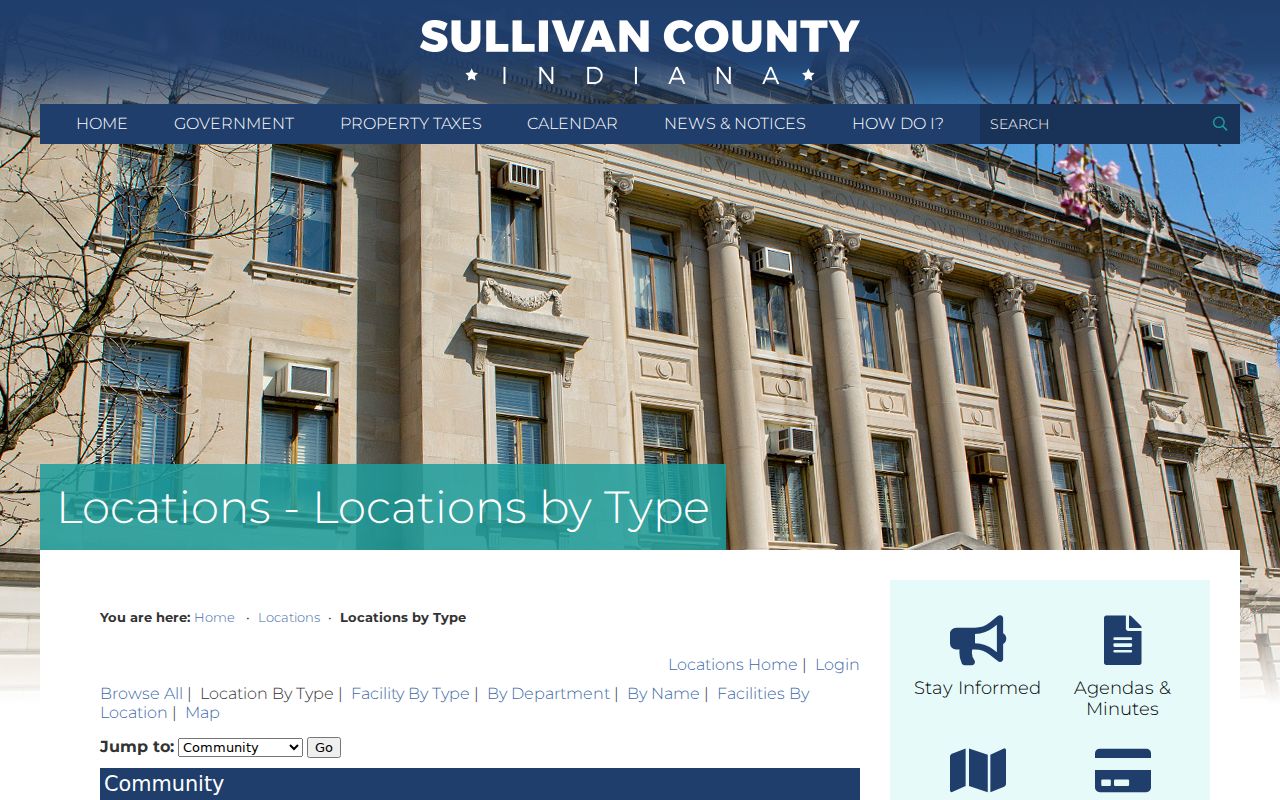
The courthouse photo shows the public office setting in Sullivan County, not a warrant subject or any person-level record.
Verify Sullivan Recall With Court and Sheriff
A recall starts with the issuing court and ends with the Sheriff. The Clerk's docket records the judge's action first. Then the Sheriff's process system has to catch up. Check both sides. A Sullivan County warrant can still show as active in one system weeks after the other shows it recalled, and trusting a single source leaves you reading an old entry. So call the Clerk, get the status, then confirm the Sheriff's side reflects the same recall before you treat the matter as closed. Keep every paper along the way: the court order, the payment receipt, the bond paperwork, and the notice for the next hearing. If the bench warrant grew out of a failure to appear on a traffic case, ask whether the court reported your appearance and disposition to BMV. That compliance entry and the warrant recall are two separate events, and clearing one does not clear the other. MyCase helps, but it can leave out confidential or older material. Under the Indiana Access to Public Records Act, a focused written request can still identify an existing warrant, service return, or recall record. Describe the record with reasonable particularity. Give the cause number, the approximate issue date, the issuing court, and whether you want a warrant order, a service return, a recall entry, or a bond record. A narrow request like that gets results. Asking the Sheriff to build a countywide warrant list its public site does not provide gets none. Juvenile, sealed, expunged, and active-investigation files may stay restricted, and the Clerk can explain what is open to inspection or copying. The Public Access Counselor handles APRA procedure questions but cannot change a Sullivan County bench warrant. When a file is closed to you, a lawyer can work through the authorized case process instead of relying on a public web result. One more trap: a civil body attachment is not a criminal bench warrant. Indiana trial rules treat civil custody and review separately, and the bond or release terms in that record can differ. Ask the Clerk to name the case type before you pick a response.
Before you hang up on the confirmation call, slow down and take notes. Ask for the exact wording of the current status. Then ask the date of the latest court action. "Active," "served," "recalled," and "quashed" mark different stages of a Sullivan County case, and the distinction matters. Ask whether another hearing is still set, because a recalled warrant does not erase the duty to appear on the underlying matter. If you posted bond, keep the receipt and read every release term. A missed date down the road can trigger a new warrant and possible forfeiture. These checks tie the public record to the court's present instructions, rather than assuming an older web entry tells the whole story.